
 Aramide Okunboh, Correspondent, LASU Conscience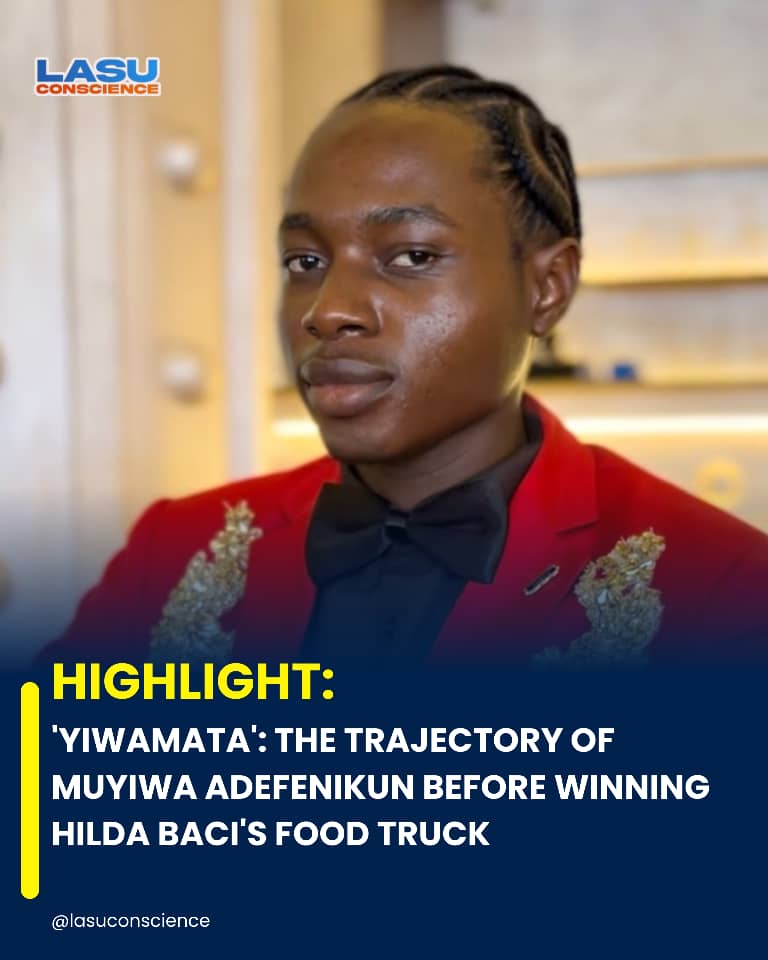
In one of the inspiring stories of resilience and a practical example of where passion meets preparation, Muyiwa Adefenikun, CEO of Yiwamata, is an individual who founded and embodied the spirit of entrepreneurship from an early stage and harnessed it gradually and consistently into becoming a celebrated figure.
Muyiwa Adefenikun, a recent Journalism graduate from the Faculty of Communication and Media Studies, Lagos State University (LASU), opened up about how his journey into entrepreneurship began with selling skincare products in 100L, making durags for his coursemates, before eventually finding the spark that has now brought him into the spotlight.
In this candid interview with LASU Conscience, ‘Yiwamata’ takes us through his trajectory of the hustle before the recognition, the pain before the fame, the struggles that come with being close to fame, and his eventual emergence as the winner of a Food Truck at the prestigious Hilda Baci Competition.
Can you take us down memory lane? What was your undergraduate journey like?
“I graduated from the Department of Journalism. I was a very social student, quite popular in my class even before I started ‘Yiwamata.’ I was always selling one thing or the other, ranging from skincare products during my first year to durags, lip balms, and more.
People would literally tag me on the class group whenever someone asked where to get anything. It was a casual joke among my friends then, but if I was broke enough, I would find that thing and sell it!”
How did the environment in LASU shape your resilience? Were there specific campus experiences that prepared you for the business world?
“I can’t say my preparation started on campus. Right from when I was a child, I loved being at my mother’s shop attending to customers. After secondary school, I worked for about two years before gaining admission into LASU. I’ve been a primary school teacher, a factory worker, and a waiter—which I enjoyed the most. It made sense since I grew up doing the same in my mother’s beer parlour. Doing business wherever I go is just a no-brainer for me.”
Did your passion for food start in LASU? Were you the student always cooking for friends, or was Yiwamata a post-graduation discovery?
“My passion for cooking started long before LASU. I was that child always eager to impress. I took that same energy from my academics, where I was always top five. While working in my mother’s kitchen, I used to fear customers would notice a change in the taste of her pepper soup when she wasn’t around, so I practised until I perfected the recipe.”
Describe the moment you were announced as the winner of the Food Truck at Hilda Baci’s Competition
“Honestly, I can’t even describe it. It felt like someone had finally seen me! I couldn’t hold back my tears; all my steeze and composure flew out the window. I was overwhelmed with bliss. The words coming out of Hilda’s mouth meant more to me than the prizes. It felt like she had documented every time I tried, every ‘no’ I got, and every awkward first impression.
In that moment, she saw how much I thrived against all odds and decided,”‘Today, Muyiwa Adefenikun is a winner.'”

What is the story behind the name Yiwamata? What makes your food unique in this competitive industry?
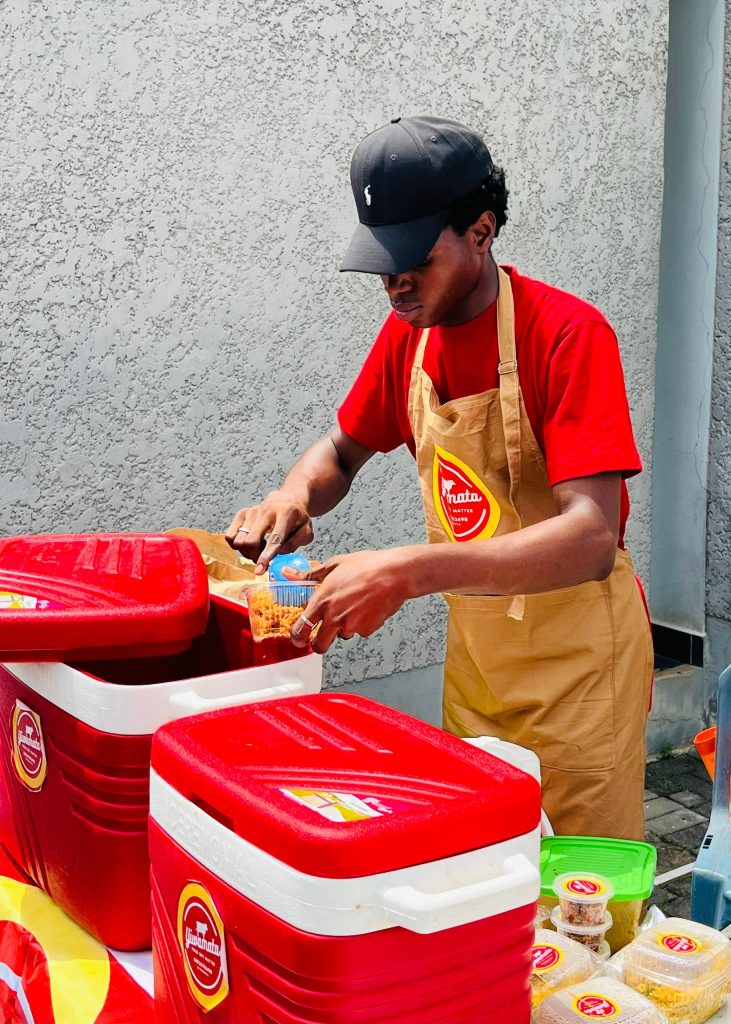
“I started ‘Yiwamata’ in 200L. I used to cook pepper soup for my friends every new semester, but one day, I brought peppered beef instead. I packed them in small containers to share discreetly so I wouldn’t run out. When others asked, I lied and said I was selling them. People actually gave me money that day, and the rest is history. Our tagline is ‘Food Wey Mata’—you just know this is food that matters.”
What motivated you to enter the competition, and what was the most challenging task?
“Chef Hilda Baci is a huge inspiration. She showed me there’s no limit. The most challenging part was not being able to afford some items for the practicals. But she encouraged us to do what we could. My setup wasn’t the most expensive, and I only practised recipes I could afford, yet I still won the grand prize. To anyone joining next year: don’t pressure yourself.”
Transitioning from student to CEO is huge. What is your biggest “CEO lesson” so far?
“You need people. You can’t do it alone. Hire people who handle tasks better than you and share your vision. But also, don’t be afraid to let go of people who are holding the business back. That doesn’t make you a bad person—it makes you a growth-oriented leader.”
Where do you see Yiwamata in the next five years?
“I see Yiwamata becoming one of the biggest fast-food restaurants in the country. I can picture a Yiwamata restaurant in every neighbourhood across Nigeria.”Entrepreneurship isn’t always glamorous.”
Can you share a low moment and how you pulled through?
“There are many. Carrying peppered meat and ponmo (cow skin) in my bag, begging students to patronise me; missing classes and tests to build the brand; going to Iyana-Iba every day because I didn’t have a freezer for bulk storage; or recently, being told ‘no’ every single time I tried to lobby for a space at the Senate Building. I just never give up.”
What is your advice to a LASU student with a big dream but limited resources?
“Please start. Start where you are, with what you have. Don’t just sit at the drawing board planning and never doing. I struggled with perfectionism too, but one day I just decided to move. This is your sign: take that bold step. You’ll figure it out along the way.”
Finally, what does it mean to be the CEO of Yiwamata? If you could describe your journey in one sentence, what would it be?
“I am someone whose greatest fear is poverty and mediocrity, and that is why I work like my life depends on it.”

Interestingly, following Muyiwa’s emergence as the winner of Hilda Baci’s food competition in 2025, the two-time Guinness World Record holder stormed LASU on Tuesday, January 13, 2026 to present the ₦2 million fully fitted food truck—a move that consolidated ‘Yiwamata’ and marked the beginning of a new dispensation for the food and drink brand within the LASU community.

 Abati Favour, Editor, LASU Conscience
 Idowu Araoluwa, Editor, LASU Conscience