
 Oluwarantimi Oludase, Deputy Editor-in-Chief , LASU Conscience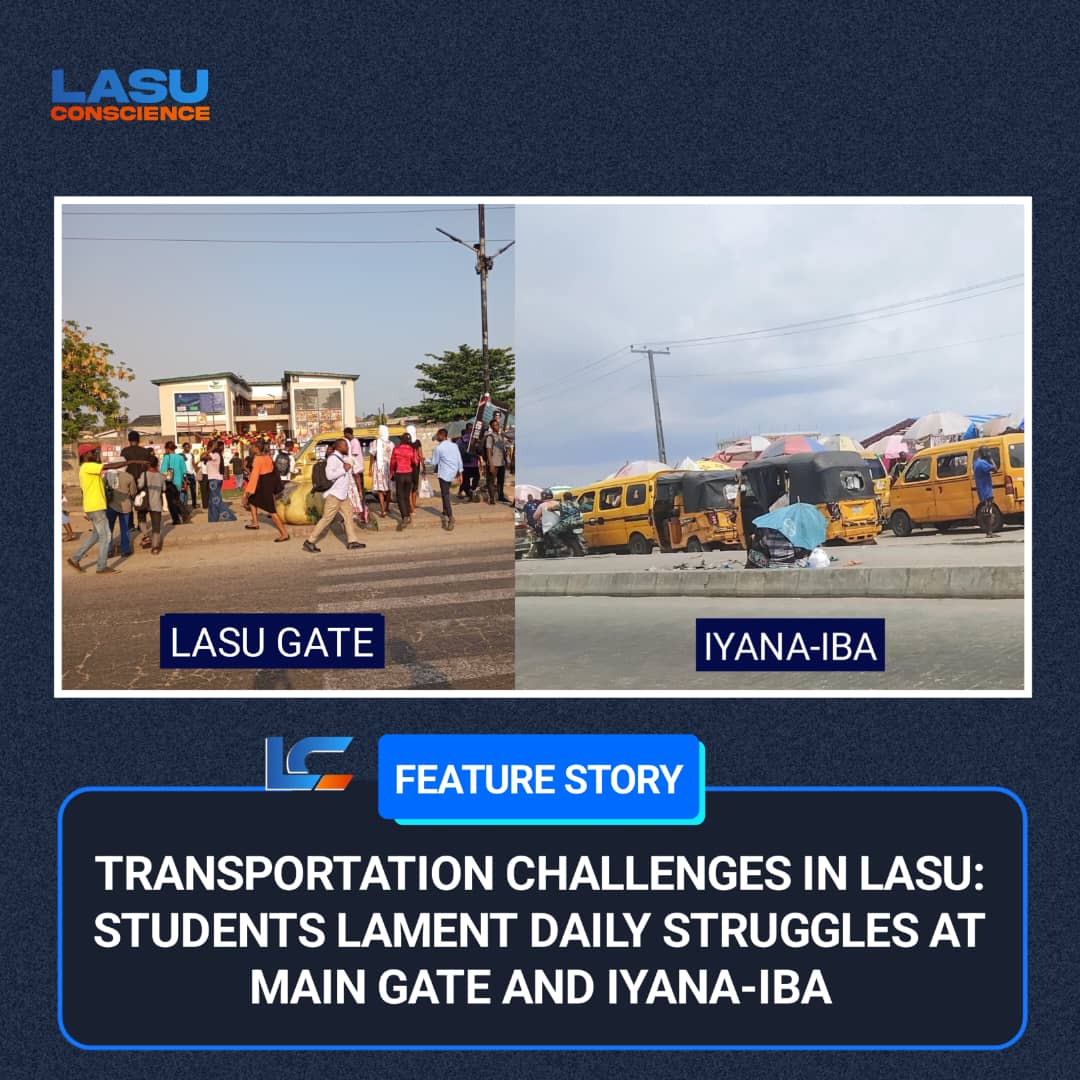
Being a student of Lagos State University comes with several daily challenges; however, one of the most persistent concerns repeatedly raised by students is the issue of transportation. Many LASUites have expressed frustration over long queues, limited mobility options, unstable fares, and daily stress. Unfortunately, these transportation challenges are most pronounced at the two major points of entry and exit into LASU—the Main Gate and the Iyana-Iba Gate.
This report takes a closer look at these issues, amplifies students’ complaints and fears, and highlights possible solutions.
THE LASU MAIN GATE
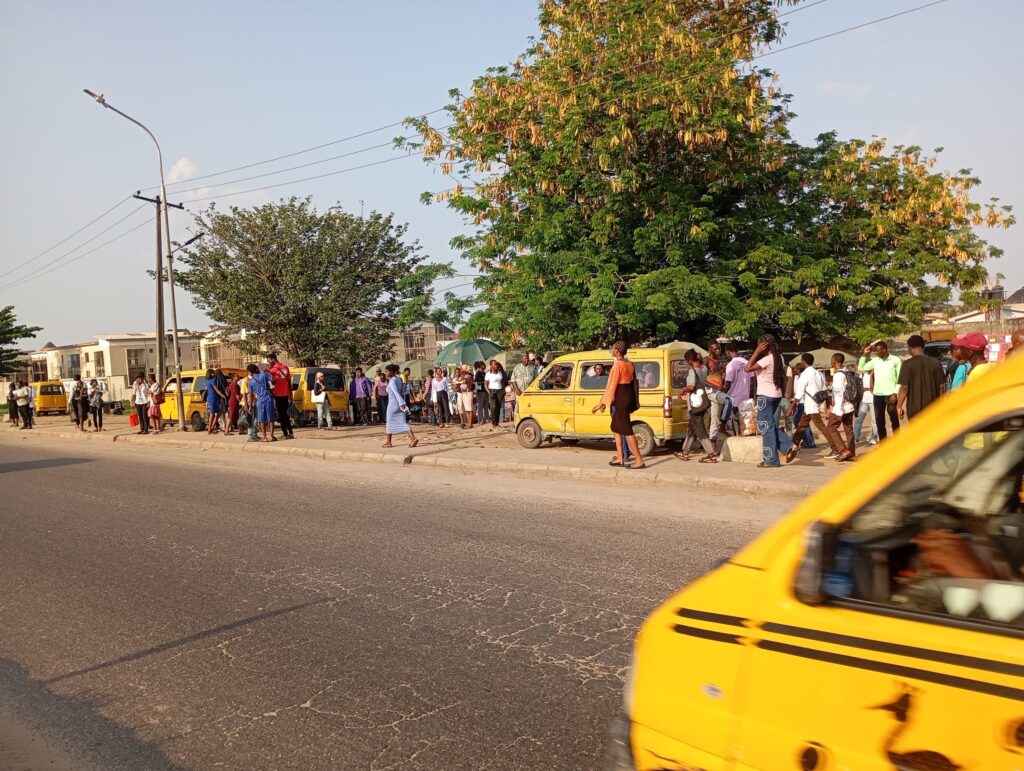
Leaving one’s hostel for campus often begins with the daily struggle of finding a bus or tricycle (maruwa) to the LASU Main Gate. Speaking with a student, she described her daily hurdle in trying to get transportation to school.
According to her: “It’s not easy to get a bus from First Gate to LASU Gate every morning, particularly around 8 a.m. There is always an influx of people by the roadside who want to board the same bus or tricycle with you, and the rush becomes uncomfortable.”
She further complained about unstable transport fares: “Sometimes in the morning, tricycles charge ₦200–₦300 depending on how people rush, while buses charge ₦200 to the main gate. On rare occasions, they collect ₦100.”
These challenges are not unique to students coming from First Gate; many LASUites coming from farther locations lament similar struggles before even getting to the gate.
While getting to campus is stressful, the journey back home comes with even greater concern. A recent survey by LASU Conscience revealed that from 3 p.m. onward, students experience scarcity of buses and tricycles, increased fares, long waiting times, and heavy traffic.
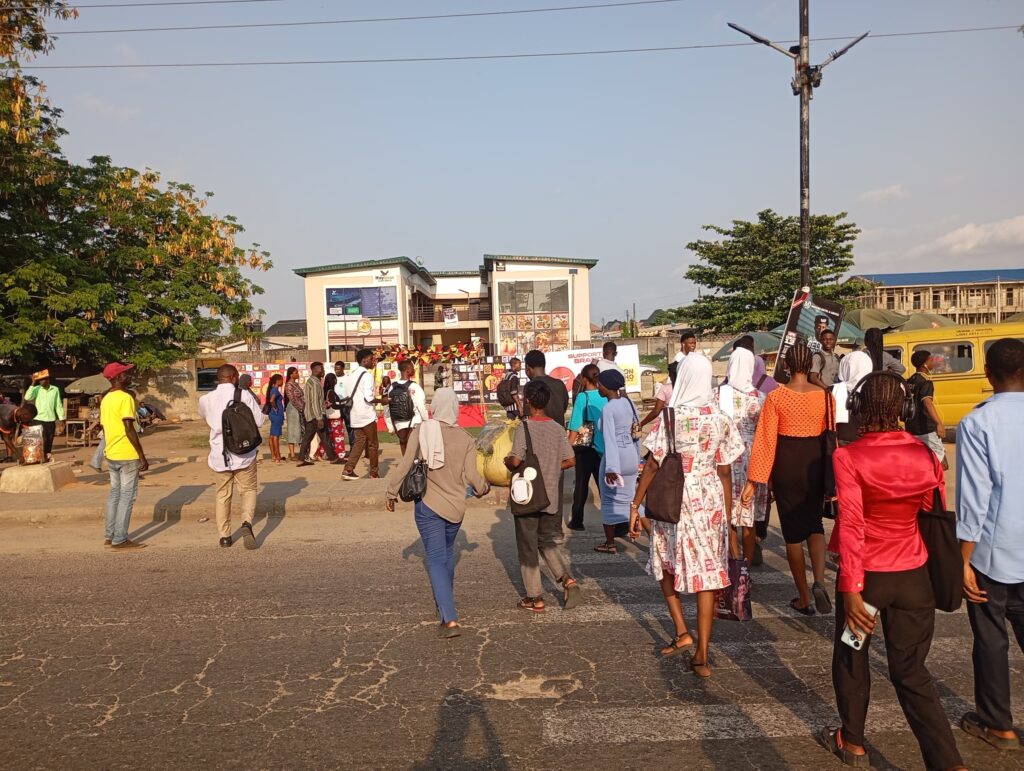
Gifted, a student, described the main gate as unpredictable: “I always have extra fare, just in case. One just has to be practical about that gate.”
She further observed that: “If you leave campus between 12 p.m. and 3 p.m., the prices are normal, but once it’s around 4 p.m., it’s a different case.”
Another student added: “The struggle for buses begins around 4 p.m. It’s either you don’t see any bus or the fare is suddenly high.”
Despite years of complaints, students insist that no permanent solution has been implemented.
THE LASU IYANA-IBA GATE
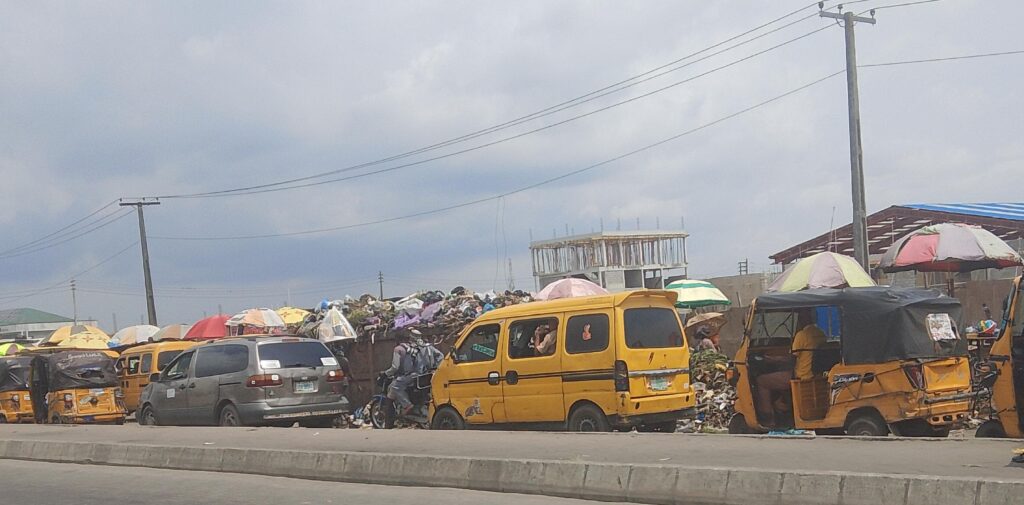
The Iyana-Iba Gate, located beside the Faculty of Arts, is infamous among students. It is one of the busiest environments around LASU, characterized by the influx of students, traders, commuters, noise, dust, congestion, and constant traffic. Many students describe the area as chaotic, foul-smelling, and stressful.
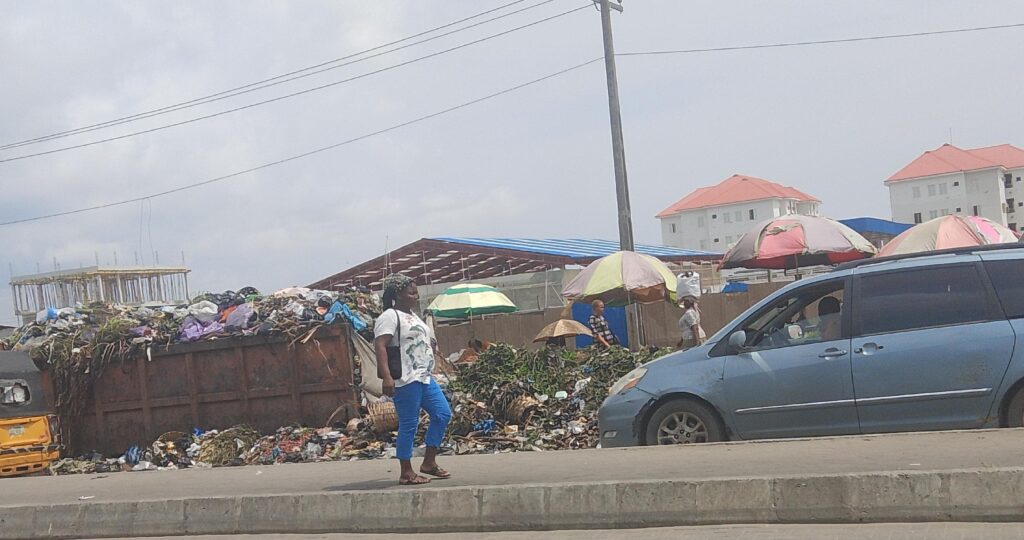
In addition to these environmental issues, students frequently complain about transport fare hikes, theft, and insecurity. Omotolani, a 200-level student of History, described her frustration: “Sometimes, we spend 30 minutes to an hour trying to get a bus. When we finally do, the fare has doubled.”
Another student explained how the unpredictable transport fares affect her finances: “The price of transportation to my residence increases as the sun sets. This affects my budget and allowance, making life difficult.”
Traders in the area are not unaware of these struggles. Mama Ope, a trader at Iyana-Iba, noted: “We see students struggle every day. Sometimes they even beg the drivers to collect less money.”
WHERE IS THE STUDENTS’ UNION IN ALL OF THESE?
Interestingly, the transportation issues at LASU’s gates didn’t begin recently. The 34th and 35th LASUSU administrations attempted to regulate transportation fares, prioritizing the Main Gate.
The 35th Joldie-led administration even announced fare regulation and temporarily provided buses, although the initiative was short-lived.
With the 36th APK-led administration now in office, transportation issues have resurfaced. To address this, the union released a broadcast announcing an agreement with the ROAD TRANSPORT EMPLOYERS ASSOCIATION OF NIGERIA (RTEAN), LASU Chapel, regulating fares as follows: LASU – First Gate: ₦100 (formerly ₦200)LASU – Igando: ₦400 (normal price).
However, despite this announcement, students reported no changes. LASU Conscience contacted the Welfare Director, Comrade Adepegba Aderemilekun (Rimex), for clarity.
According to him, the Students’ Union is aware of the challenges and is making efforts to address them.
“It’s no news that LASU students face transportation issues at the gate. We have met with the chairman and other stakeholders to ensure price regulation. My comrades visit the gate at least three times a week to enforce compliance,” he revealed.
He reaffirmed the new regulated prices: “LASU – First Gate: ₦100LASU – Igando: ₦400LASU – Igando during rush hour: ₦500, to discourage drivers from bypassing the LASU park and to reduce cases of one-chance robberies.”
He also clarified that the regulation applies only to buses, not tricycles: “Maruwa cannot adhere because of their smaller capacity and short-distance routes. But they should not extort students. The price remains ₦200 to First Gate and ₦300 to Iba.”
He also addressed complaints about neglecting the Iyana-Iba axis: “This issue has been discussed in our welfare meetings, and due diligence will be initiated soon.”
On security, he added: “My team has been working with security personnel to ensure maximum safety for students both on and off campus.”
WHAT IS THE WAY FORWARD?
Following these numerous complaints among students, we have also observed that the students’ union through the Welfare Director and the taskforce committee stay at the gate sometimes in order to ensure compliance with these regulations, however, while this is commendable, a lasting solution should be put in place.
From all indications, it is clear that the agreement between the Road Transport Employers Association of Nigeria (LASU Chapel) and the students’ union isn’t being honoured, and this has been the same case with previous administrations, which sees the agreement only adhered to once the executives or students’ taskforce are available at the main gate.
We urge the Students’ Union to further sit down with the park chairman and ensure that there is an enforced implementation of these regulations, in order to avoid the ongoing complaints of transportation fares inconsistency.
For the Iyana-Iba axis, while we have pointed out to the Welfare Director about the intentional neglect of this route, and he has promised that plans are ongoing to enact “due diligence” in that area, we expect to receive positive updates in the coming weeks.
Conclusively, we urge all LASUites not to hesitate to reach out to LASU Conscience, as we continue to amplify these issues that are posing as a hindrance to students’ welfare.

 Abiola Kilanko, Editor, LASU Conscience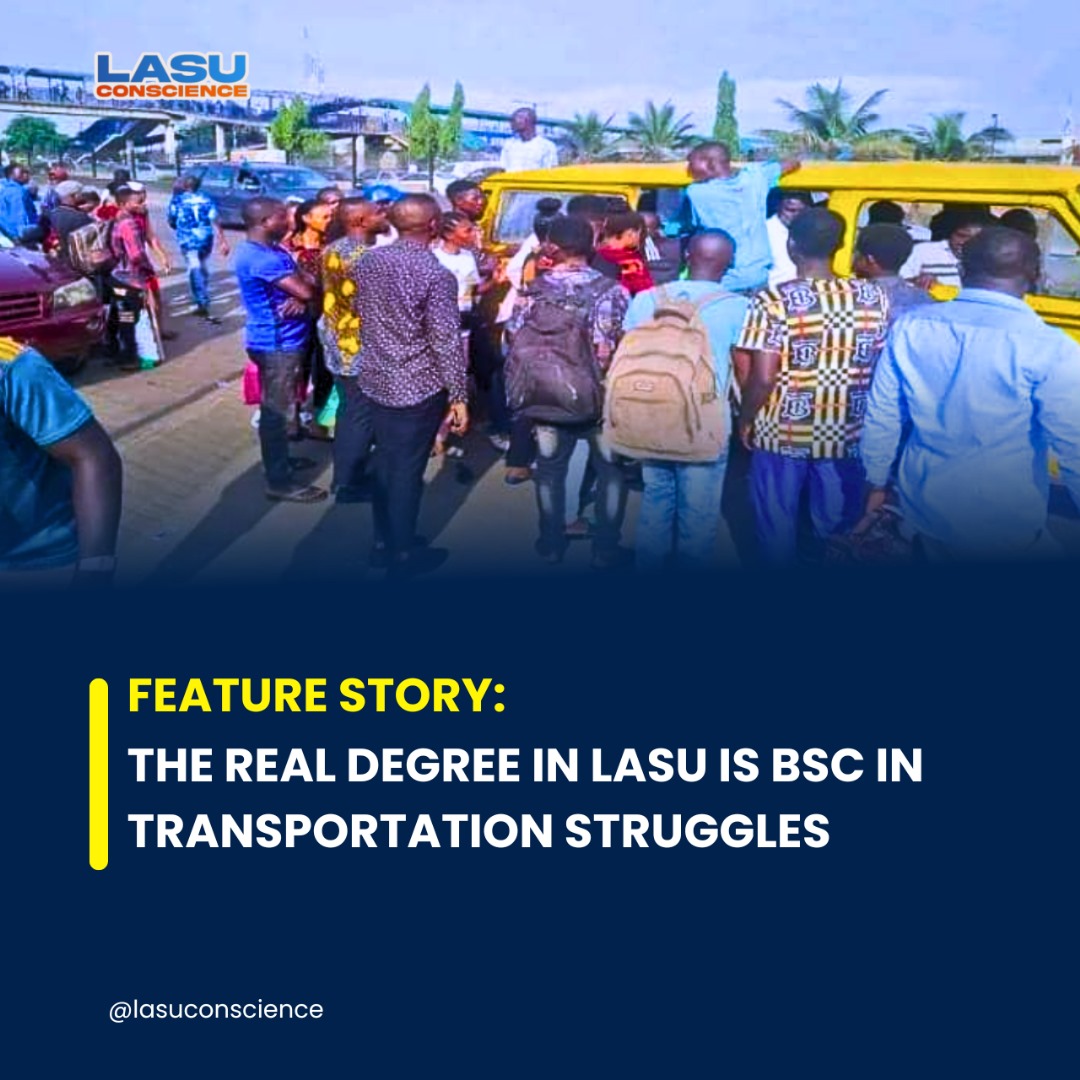
 Adesanya Gift, Correspondent, LASU Conscience